



504 Plan Accommodations: A Guide for Educators
504 plan accommodations remove barriers so students with disabilities can access learning. Learn the categories, how 504 differs from an IEP, and how AT fits in.




504 plan accommodations are the supports that let a student with a disability access learning alongside their peers. Built under Section 504 of the Rehabilitation Act, these accommodations remove barriers rather than change what a student is expected to learn. This guide explains what a 504 plan is, how it differs from an IEP, the main categories of accommodations, and how assistive technology fits in.
What Is a 504 Plan?
A 504 plan is a formal plan that provides accommodations so a student with a disability can access education equally. It comes from Section 504 of the Rehabilitation Act, a civil rights law, and applies to any student whose impairment substantially limits a major life activity such as learning or concentrating.
504 plans are part of the wider support landscape covered on our assistive technology for students overview.
504 Plan vs IEP
The key difference is specialized instruction. An IEP, created under IDEA, provides specialized instruction and related services. A 504 plan provides accommodations only, to ensure equal access. IEP eligibility is narrower and more detailed, while a 504 plan is broader and simpler, so some students who do not qualify for an IEP still qualify for a 504 plan.
Both can include accommodations and assistive technology; the IEP adds specially designed instruction on top.
Common 504 Plan Accommodations
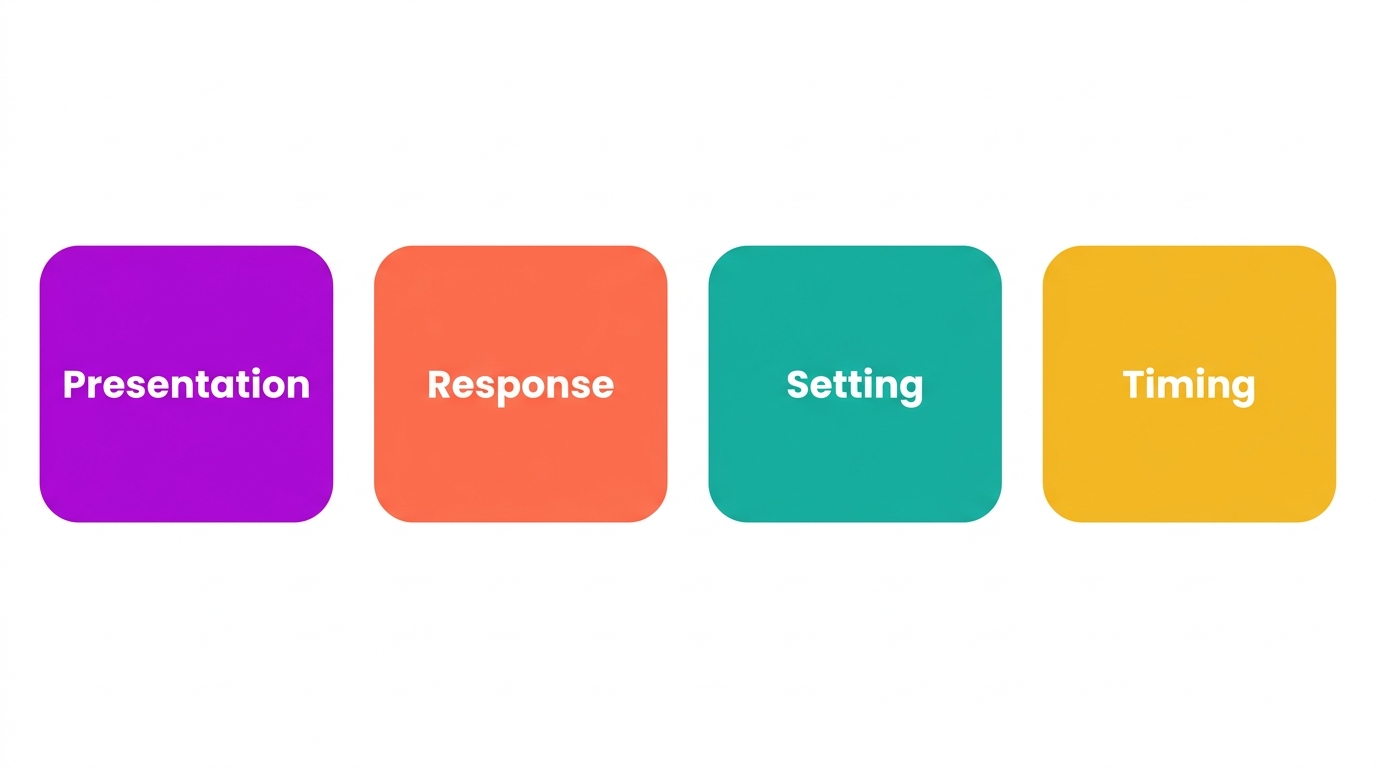
504 accommodations generally fall into four categories:
- Presentation: how material is given, such as text-to-speech, audiobooks, or large print.
- Response: how a student answers, such as speech-to-text, oral responses, or a scribe.
- Setting: where work happens, such as a quiet room or preferential seating.
- Timing: when and how long, such as extended time or frequent breaks.
Effective accommodations target the specific barrier a student faces rather than applying a generic list.
Assistive Technology as a 504 Accommodation
Assistive technology is one of the most common types of 504 accommodation. Text-to-speech supports presentation, speech-to-text supports response, and tools like word prediction or a dictionary reduce barriers without lowering expectations. The same supports often appear in IEPs, where teams must consider assistive technology by law.
How Mote Supports 504 Accommodations
Mote delivers several common 504 accommodations through one Chrome extension that works across Google Workspace. Read Aloud provides text-to-speech for presentation accommodations, speech-to-text supports response accommodations, and the built-in dictionary supports access to meaning. Because it runs on the Chromebooks and Google tools many schools already use, Mote makes these accommodations available on every device without extra hardware.
The Bottom Line
504 plan accommodations level the playing field by removing barriers, not by changing the curriculum. Match each accommodation to a specific barrier across presentation, response, setting, and timing, and use assistive technology where it builds independence. For Google Workspace schools, Mote can deliver common reading and writing accommodations across every device.



.png)
