MTSS with Mote
MTSS gives schools a structured framework for identifying and supporting every learner. Mote's reading, writing, and communication tools map directly to all three tiers of support within Google Workspace and across any web page.
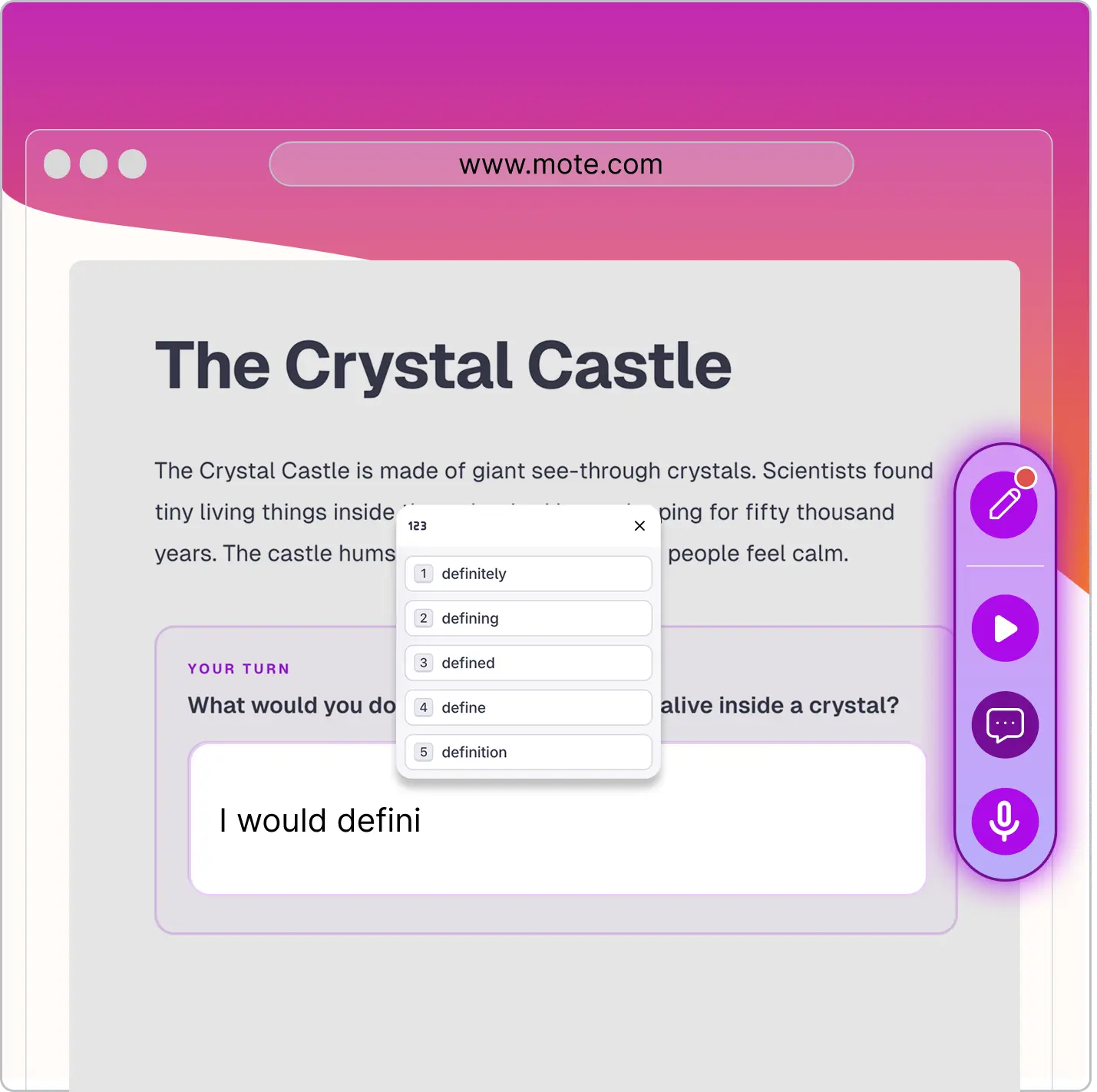



MTSS gives schools a structured framework for identifying and supporting every learner. Mote's reading, writing, and communication tools map directly to all three tiers of support within Google Workspace and across any web page.
MTSS (a Multi-Tiered System of Supports) is a proactive framework schools use to catch academic and behavioural needs early and match each student to the right level of support, instead of waiting for them to fall behind. It is now standard practice: Panorama Education's 2023 State of MTSS report found 74% of U.S. districts run an MTSS framework, up from 55% in 2019, with literacy the most common place they start.
Turning that framework into daily practice takes tools every student can reach without a referral. Mote is a reading, writing, and communication toolkit that works inside Google Workspace and across the web, with supports mapped to all three MTSS tiers and usage data that shows interventions are actually being used. The guides on this page go deeper on how the tiers work, how MTSS compares to RTI, and how to plan and monitor an implementation.
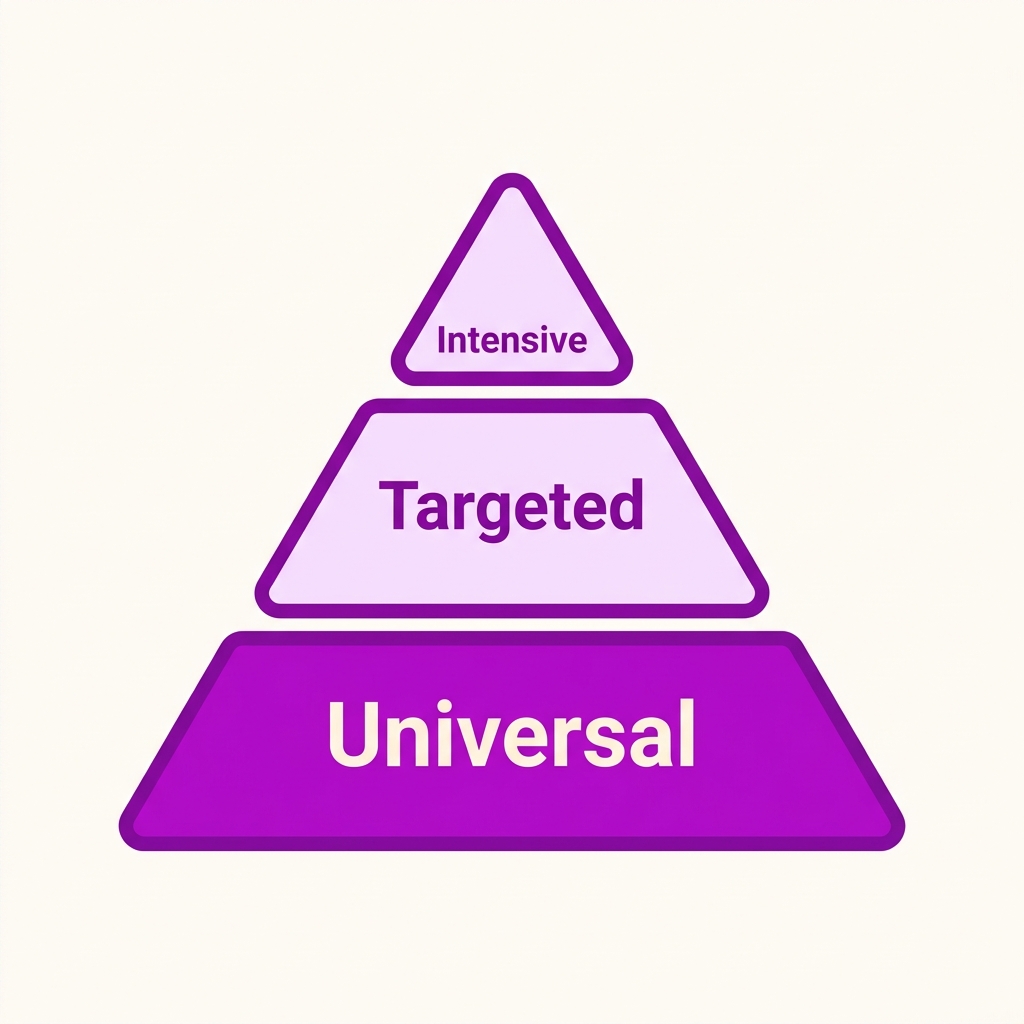
Every student in a fifth grade classroom should be able to access a science reading - not just the confident readers. Mote's Read Aloud, text highlighter, and screen mask are available to all students as standard classroom tools, not special accommodations. When 80-90% of students can access grade-level content independently through these universal supports, teachers can focus their attention on the students who need more.
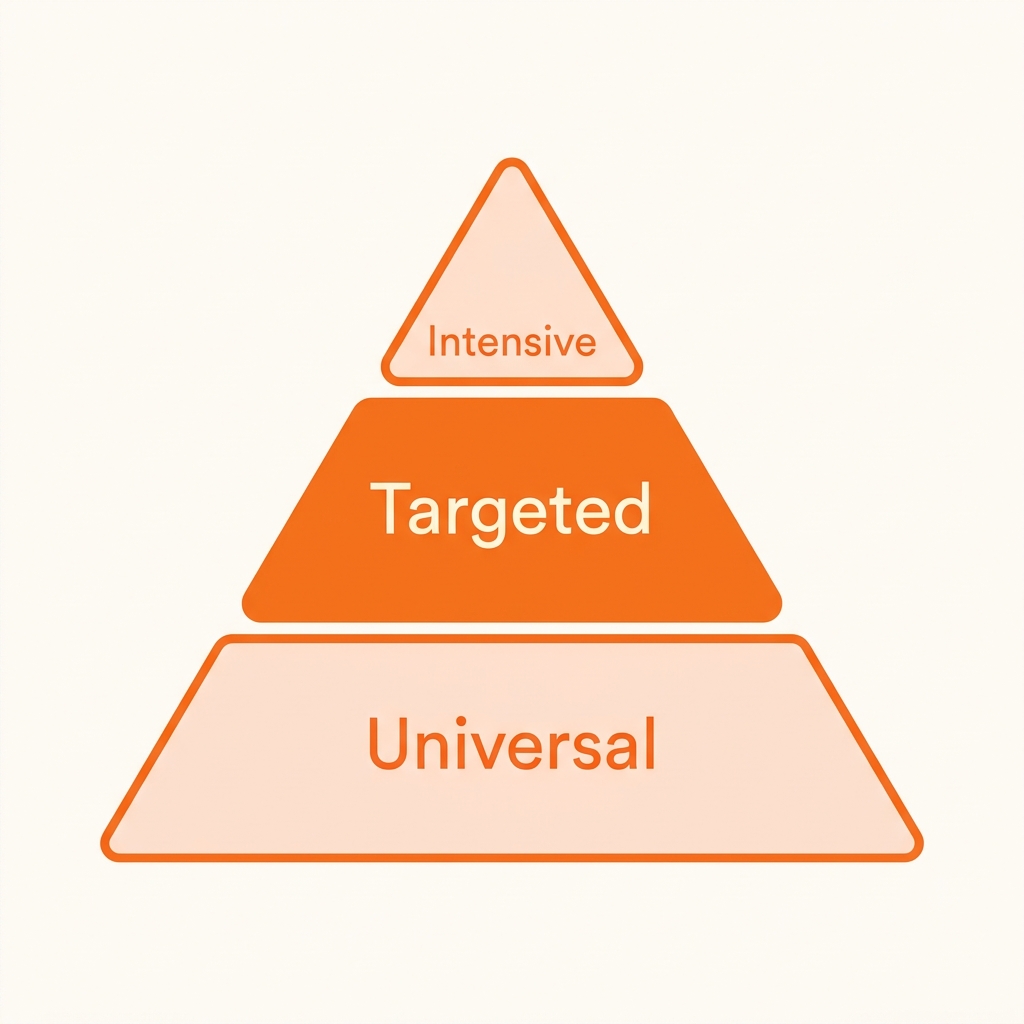
A small group of English Language Learners in a third grade class need extra support with a social studies unit. Mote's built-in translation across 60+ languages and dictionary let these students access the same content as their peers while building vocabulary in the language of instruction. These targeted tools close comprehension gaps without pulling students out of the general education classroom.
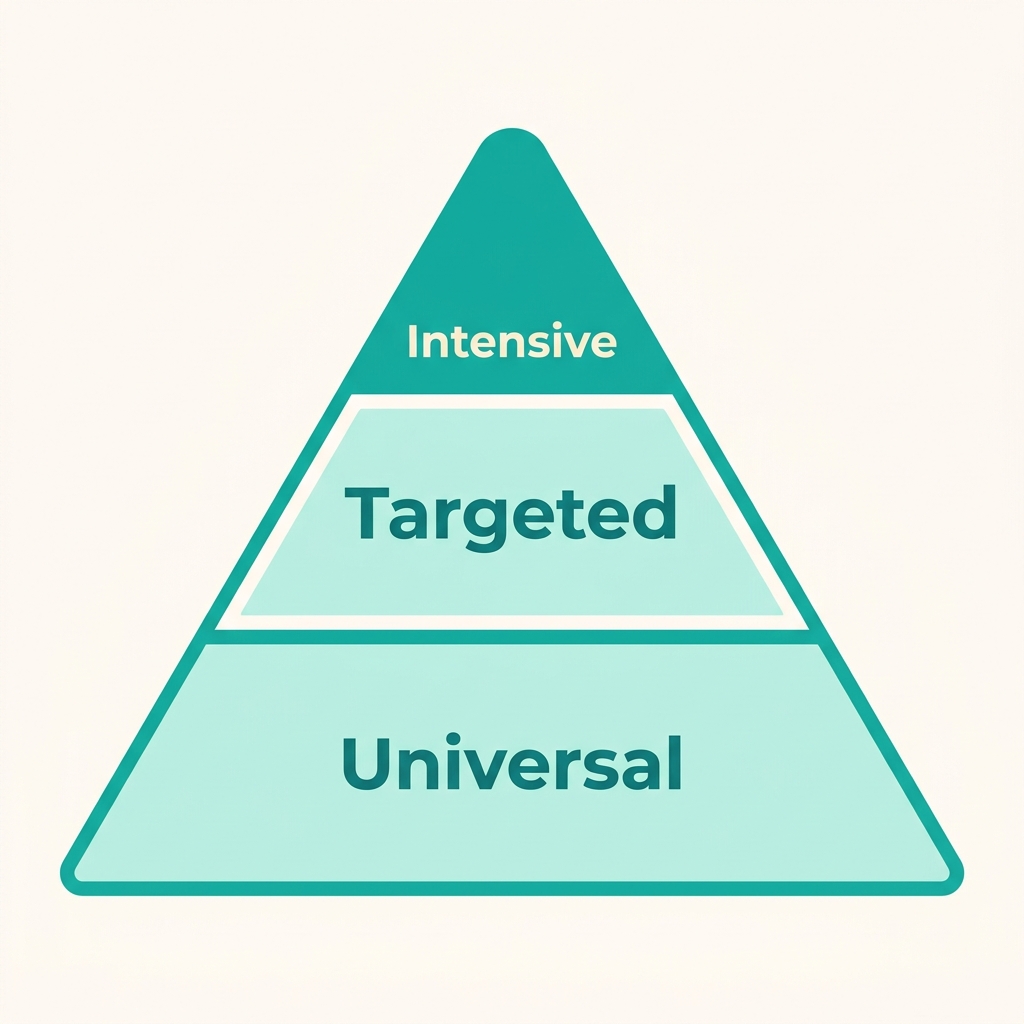
A student with significant writing difficulties needs to complete a paragraph response but keyboarding is a barrier. Mote's text prediction offers grammar-aware spelling suggestions while voice typing lets them dictate ideas directly. Combined with Read Aloud to review their own writing, these intensive supports address the specific needs identified in the student's intervention plan - all within the same Chrome extension their classmates already use.

An MTSS coordinator reviewing Tier 2 interventions needs to know whether students are actually using the tools provided. Mote's admin dashboard shows which students are accessing which features and how often - Read Aloud sessions, translation usage, dictionary lookups, voice typing activity. This usage data complements academic progress monitoring and helps teams make informed decisions about whether to continue, adjust, or intensify interventions.

The 5.3 million English Language Learners in U.S. schools need support at every tier of an MTSS framework. Mote provides natural voices and translation across 60+ languages, so a newcomer student receiving Tier 3 intensive support and a bilingual student thriving at Tier 1 both have access to language tools that meet them where they are. Multilingual support is not a separate programme - it is built into every tier.

Rolling out MTSS tools across a district means they need to work at scale on day one. Mote deploys through Google Admin Console to every student without individual installation, and is FERPA, COPPA, and GDPR compliant with signed Data Processing Agreements. When an MTSS team documents that a student's Tier 2 plan includes text-to-speech and translation support, the admin dashboard can verify those tools are being used.
A systematic review published in Heliyon by Nitz et al. examined 40 empirical studies on multi-tiered systems of support in elementary schools. The review found effect sizes ranging from d = 0.11 to 0.94 for reducing problem behaviour, with on-task behaviour improvements from 59% to 84% in single-case studies. These findings provide evidence that structured tiered support frameworks produce measurable outcomes across diverse school settings internationally.
A randomised controlled trial conducted by the Institute of Education Sciences across approximately 90 elementary schools found that students with the most significant behavioural needs - the top 15% - showed improved reading scores and decreased rates of disruptive behaviour when schools implemented MTSS with fidelity. The Center on PBIS noted that greater use of classroom management practices in treatment schools contributed to these outcomes.
Adoption data from Panorama Education's 2023 survey of 600 respondents across 11 states shows MTSS implementation grew from 55% to 74% of districts between 2019 and 2023. Literacy remains the most common application at 71%, with social-emotional learning rising to 56%. The framework has moved from an emerging practice to a mainstream approach in K-12 education, with nearly every state now supporting MTSS implementation at the local level.
No. MTSS is a general education framework designed to support all students, not a replacement for special education services. However, MTSS helps schools distinguish between students who need better instruction or targeted intervention and those who genuinely require special education evaluation. The data collected through MTSS progress monitoring can inform referral decisions and support IEP development.
Full MTSS implementation typically takes two to four years. The first year usually focuses on building leadership teams, establishing universal screening, and training staff on Tier 1 practices. Subsequent years introduce systematic Tier 2 and Tier 3 processes, refine data collection systems, and develop fidelity monitoring. Schools that already use RTI or PBIS often have a head start since those frameworks overlap with MTSS components.
Schools use data-based decision making to determine tier movement. Universal screening identifies students who may need additional support, and ongoing progress monitoring tracks whether interventions are working. If a student is not responding to Tier 2 intervention after a defined period, the MTSS team reviews the data and may recommend moving to Tier 3. Students can also move back to lower tiers as they make progress.
RTI (Response to Intervention) focuses primarily on academic interventions, while MTSS is a broader framework that integrates academic, behavioural, and social-emotional supports into a single system. MTSS may include RTI as one component, but it also encompasses positive behavioural interventions (PBIS) and social-emotional learning. In practice, many schools have transitioned from standalone RTI to the more comprehensive MTSS model.
MTSS implementation benefits from tools that span all three tiers. At Tier 1, universal access tools like text-to-speech, highlighters, and screen masks give every student reading support. At Tier 2, targeted tools like translation and dictionary features help specific groups such as English Language Learners. At Tier 3, intensive supports like text prediction (supported in English, Spanish, and French) and voice typing address individual needs. Mote provides all of these within a single Chrome extension that works inside Google Workspace.
Tier 1 provides universal support for all students and typically reaches 80-90% of learners through high-quality core instruction. Tier 2 offers targeted small-group interventions for the 10-15% of students who need additional support beyond Tier 1. Tier 3 delivers intensive, individualised intervention for the 5-10% of students with the most significant needs, often involving specialised strategies and frequent progress monitoring.
MTSS relies on three types of data: universal screening data collected two to three times per year to identify at-risk students, progress monitoring data collected weekly or biweekly during interventions to measure growth, and diagnostic assessment data to pinpoint specific skill gaps. Schools also incorporate classroom observations, attendance records, and behavioural data. Tools like Mote provide usage analytics that show which students are accessing reading and writing supports and how frequently.
MTSS stands for Multi-Tiered System of Supports. It is a proactive framework that schools use to identify struggling students early and provide increasingly intensive levels of support - from whole-class instruction (Tier 1) to small-group intervention (Tier 2) to individualised, intensive support (Tier 3). The goal is to meet every student where they are rather than waiting for them to fall behind.
Last updated on
July 7, 2026
