

What Is Reading Fluency? A Teacher's Guide
Reading fluency is the ability to read accurately, at an appropriate rate, and with expression. Learn its three components, why it matters, and how to build it.




Reading fluency is the ability to read text accurately, at an appropriate rate, and with expression. It is one of the five pillars of reading identified by the National Reading Panel and a critical bridge between decoding words and understanding them. This guide explains what reading fluency is, its three components, why it matters, and how to build it in the classroom.
What Is Reading Fluency?
Reading fluency is reading that is accurate, appropriately paced, and expressive. A fluent reader recognizes most words automatically, so they no longer have to stop and decode each one. That automaticity frees up mental attention for comprehension, which is the whole point of reading.
Fluency sits within the word-recognition strands described on our science of reading overview, and it develops once students have a solid foundation in phonics and decoding.
The Three Components of Reading Fluency
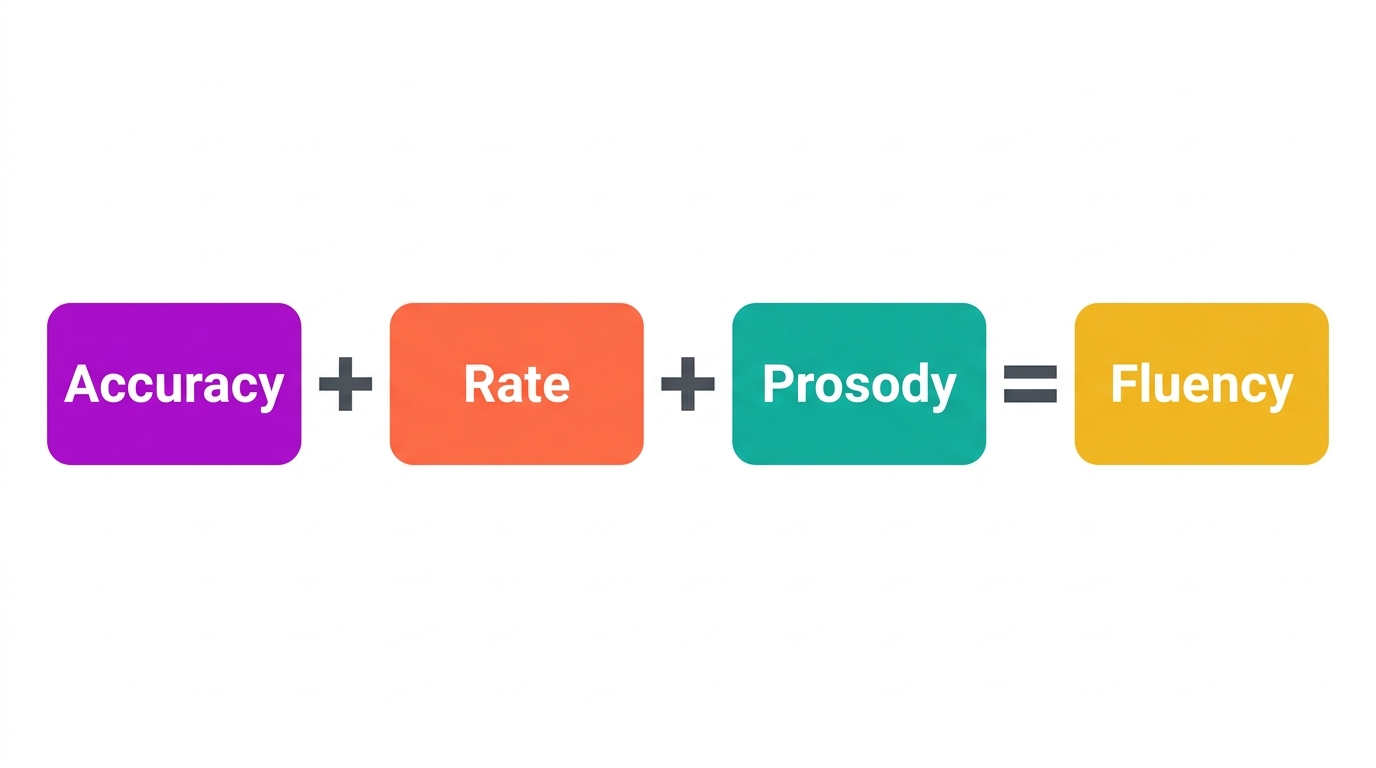
Reading fluency has three components that work together:
- Accuracy: reading the words correctly.
- Rate: reading at an appropriate speed, not too slow and not racing.
- Prosody: reading with natural expression, phrasing, and intonation.
A student can be accurate but slow, or fast but flat. True fluency means all three are present at once, which is why instruction should attend to expression and phrasing, not just speed.
Why Reading Fluency Matters
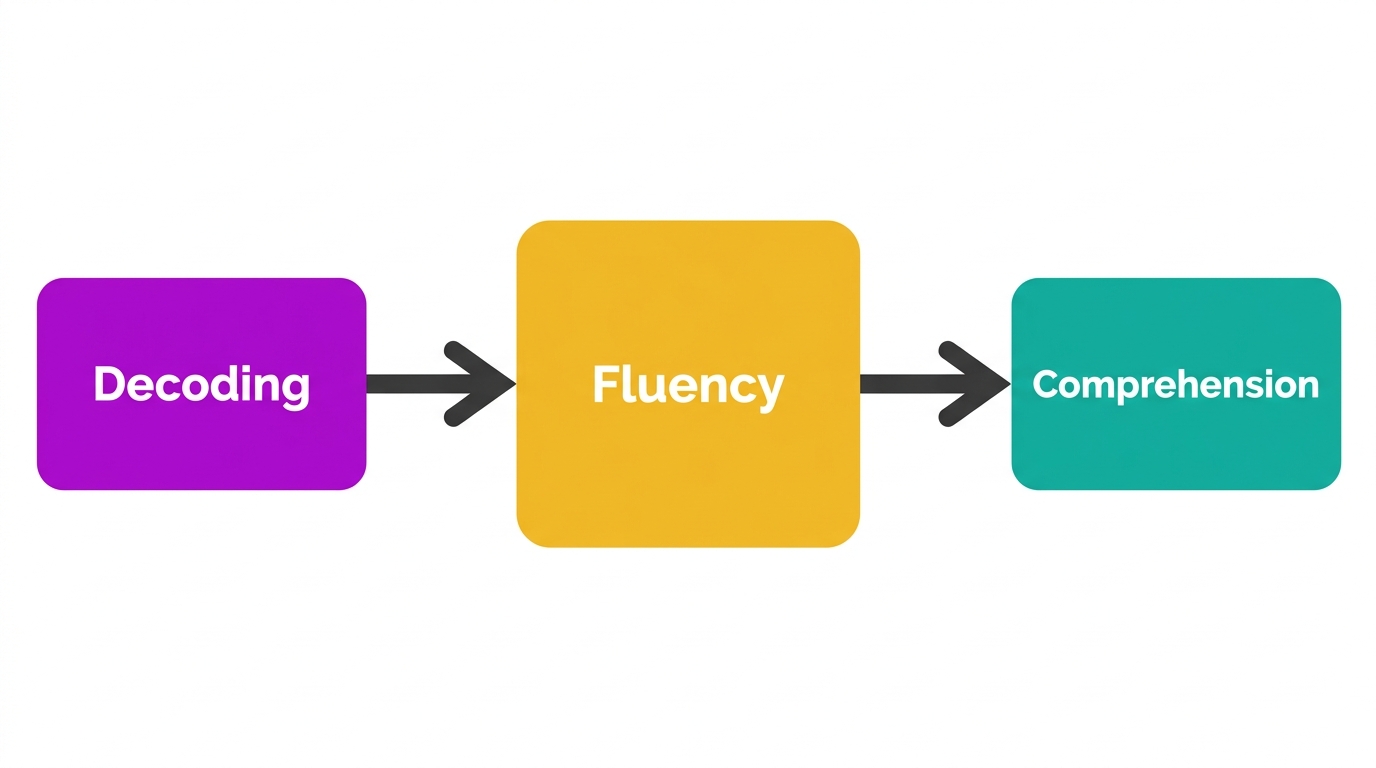
Reading fluency is the bridge between decoding and comprehension. When word recognition is effortful, a reader spends most of their attention sounding out words and has little left for meaning. When reading is fluent, that attention shifts to understanding.
The National Reading Panel identified fluency as one of five essential components of reading instruction and found that guided oral reading with feedback reliably improves it. On the National Assessment of Educational Progress, only about a third of U.S. fourth graders read at or above the proficient level, and weak fluency is a common barrier.
How to Build Reading Fluency
Reading fluency improves most through repeated, guided oral reading. Students reread the same passage several times, hear a fluent model, and get feedback. Short daily sessions with text at the right level, paired with progress monitoring, produce steady gains.
How Mote Supports Reading Fluency Practice
Mote does not replace the guided oral reading practice a teacher leads, but it gives students a clear model of fluent reading. Mote Read Aloud voices text with natural pacing and expression, so students can hear what accurate, expressive reading sounds like and read along with it. Used alongside structured practice, it helps developing readers stay engaged with grade-level text while their fluency grows.
The Bottom Line
Reading fluency is the gateway from decoding to comprehension, built on accuracy, rate, and prosody. Build it with repeated reading, fluent models, and feedback, and monitor progress over time. Tools like Mote can model fluent reading and support practice, but the guided instruction you provide is what moves students forward.