

Science of Reading vs Whole Language: What Is the Difference?
The science of reading and whole language are competing views of how children learn to read. Learn the key difference, the three-cueing debate, and what research supports.




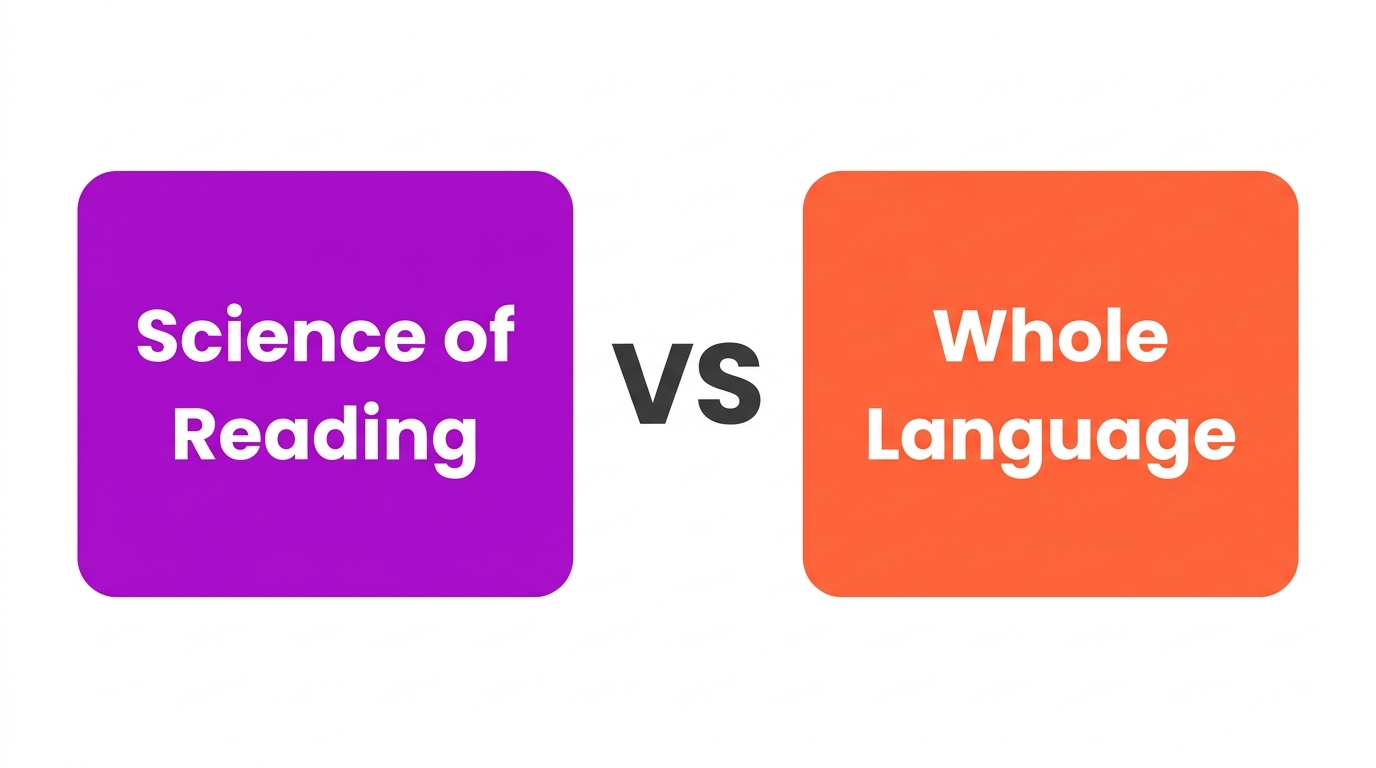
The science of reading and whole language are two competing views of how children learn to read. The science of reading calls for explicit, systematic phonics, while whole language treats reading as a natural process built on meaning and context. This guide compares the two approaches, explains the three-cueing debate, and looks at what the research actually supports.
Science of Reading vs Whole Language: The Key Difference
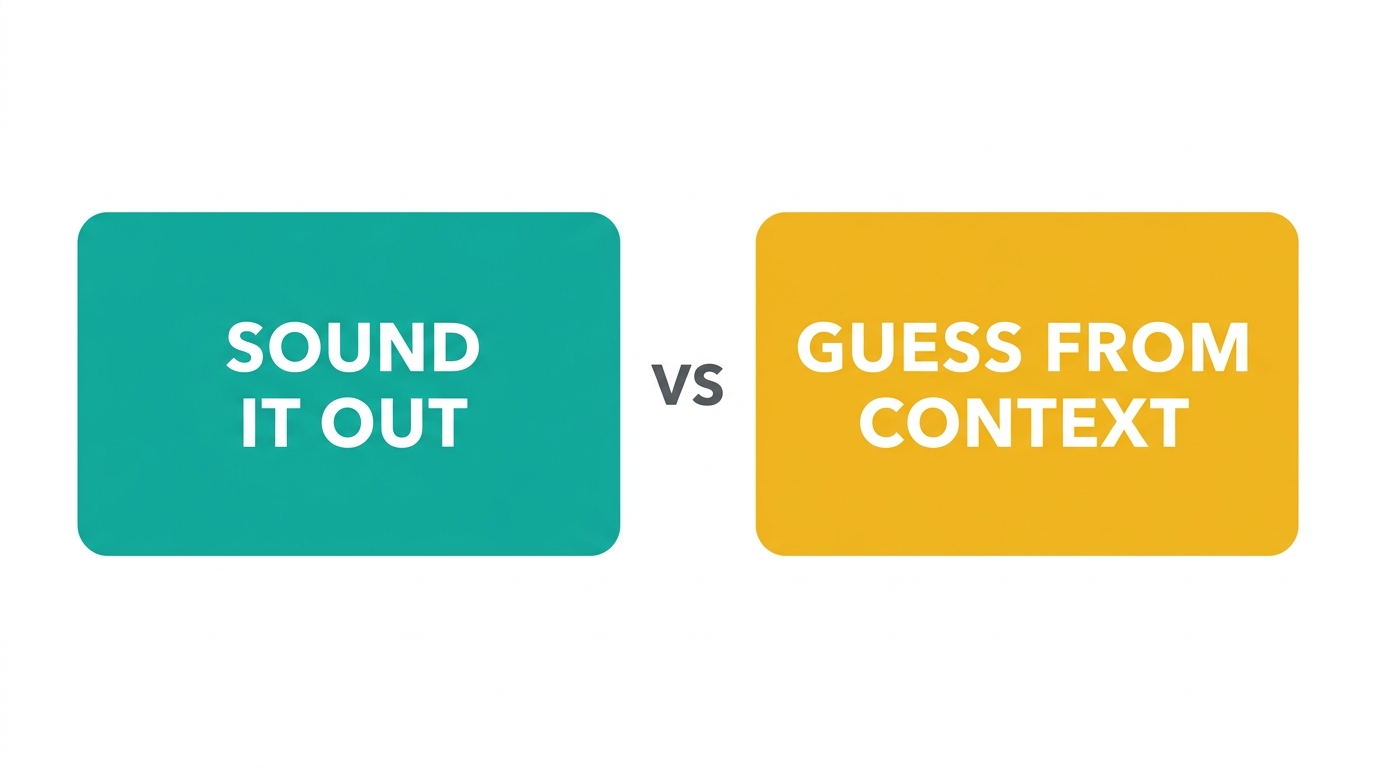
The key difference is how students are taught to read unfamiliar words. The science of reading teaches them to decode words by sound, while whole language encourages them to recognize whole words and guess unknown ones from context. In short:
- Science of reading: explicit, systematic phonics; students sound words out.
- Whole language: reading as a natural process; students guess from context and pictures.
What Is Whole Language?
Whole language is an approach that treats learning to read as a natural process, much like learning to speak. It emphasizes immersion in rich texts, reading for meaning, and student motivation. Phonics, when taught at all, is usually addressed incidentally rather than in a planned sequence.
Whole language gets some things right. Meaning, motivation, and exposure to real books matter. Where it falls short is in how it teaches students to read the words on the page.
What Is the Science of Reading?
The science of reading is the research base showing that most students learn to read most reliably through explicit, systematic instruction in five areas: phonemic awareness, phonics, fluency, vocabulary, and comprehension. For a full overview, see our science of reading pillar page.
How Each Approach Treats an Unknown Word
The clearest contrast shows up when a student meets a word they do not know. The science of reading says to sound it out using letter-sound knowledge. Whole language, through the three-cueing system, encourages students to guess using meaning, sentence structure, and pictures.
Three-cueing is widely criticized because skilled readers do not guess; they decode words rapidly and accurately by sound. Teaching students to guess can hide decoding gaps instead of closing them.
What the Research Says
The research favors the science of reading for word reading. The National Reading Panel found explicit, systematic phonics more effective than incidental approaches, especially for early and struggling readers. On the National Assessment of Educational Progress, only about a third of U.S. fourth graders read at or above proficient, and many districts now cite that gap as a reason to shift toward science-of-reading-aligned instruction.
How Mote Fits a Modern Reading Classroom
Whatever approach a school is moving from, Mote works as an accessibility and practice layer rather than a reading program. Read Aloud models fluent reading and opens up grade-level text, while the dictionary and vocabulary tools support meaning. Teachers lead the explicit instruction the research calls for, and Mote scaffolds access and practice alongside it.
The Bottom Line
Whole language values meaning and motivation, but the science of reading is right about how students learn to read words: explicitly and systematically, by sound rather than by guessing. Keep the rich texts and discussion, and replace guessing with structured phonics. Tools like Mote can support access and practice while you make the shift.