

What Is the Science of Reading? A Guide for Educators
The science of reading is the research base for how students learn to read. Learn the five pillars, the Simple View of Reading, and how it differs from balanced literacy.




The science of reading is the body of research, drawn from cognitive science, linguistics, and education, that explains how students learn to read and which instructional approaches work best. It is not a program or a curriculum. This guide explains what the science of reading is, the frameworks behind it, and how it differs from older approaches.
What Is the Science of Reading?
The science of reading is decades of interdisciplinary research showing that most students learn to read most reliably through explicit, systematic instruction. It points to five core skills and to teaching them directly rather than leaving them to incidental discovery. It is an evidence base, not a single method or product.
For a fuller overview of how this research translates into classroom practice, see our science of reading pillar page.
The Five Pillars of Reading
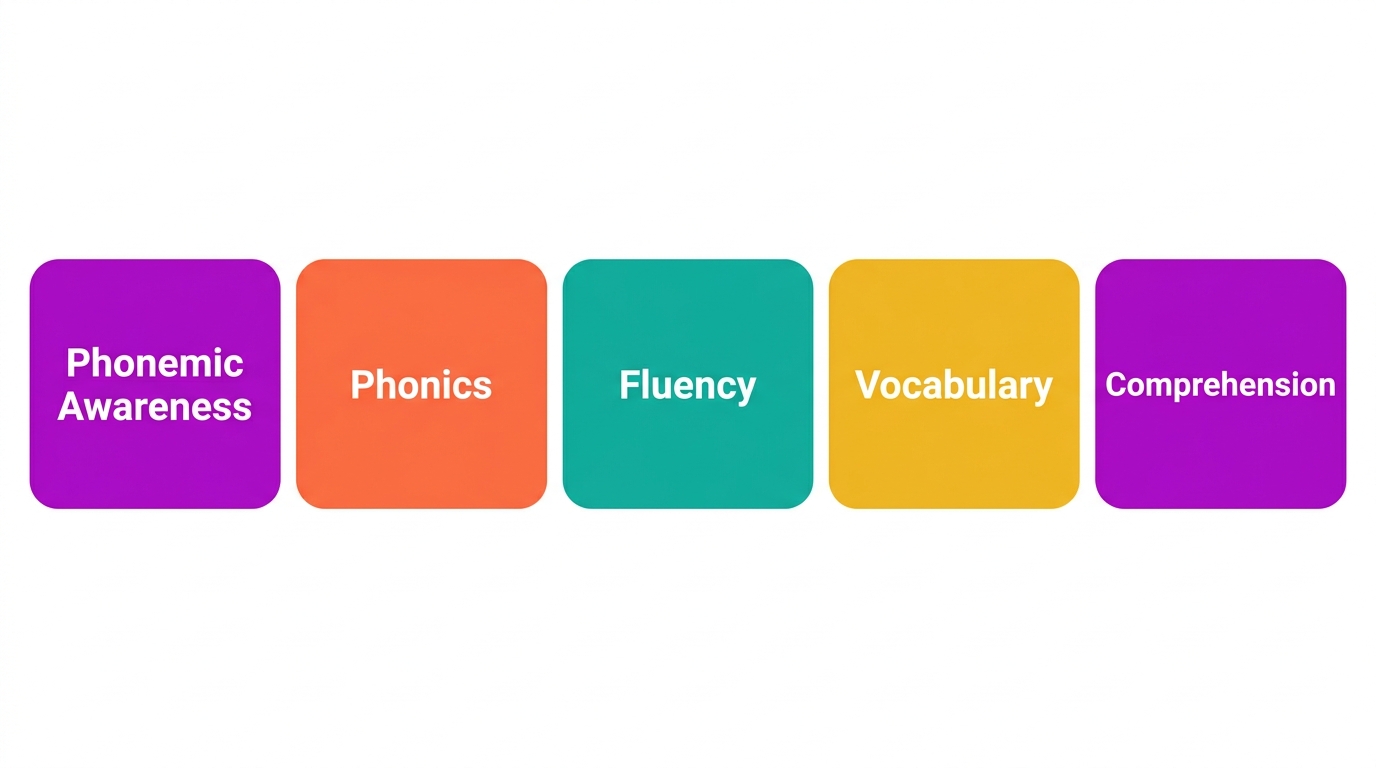
In 2000, the National Reading Panel identified five components of effective reading instruction: phonemic awareness, phonics, fluency, vocabulary, and comprehension. The first two build word recognition, the last two build meaning, and fluency bridges them.
The panel concluded these skills are taught most reliably through explicit, systematic instruction, and they remain the backbone of science-of-reading-aligned teaching.
The Simple View of Reading
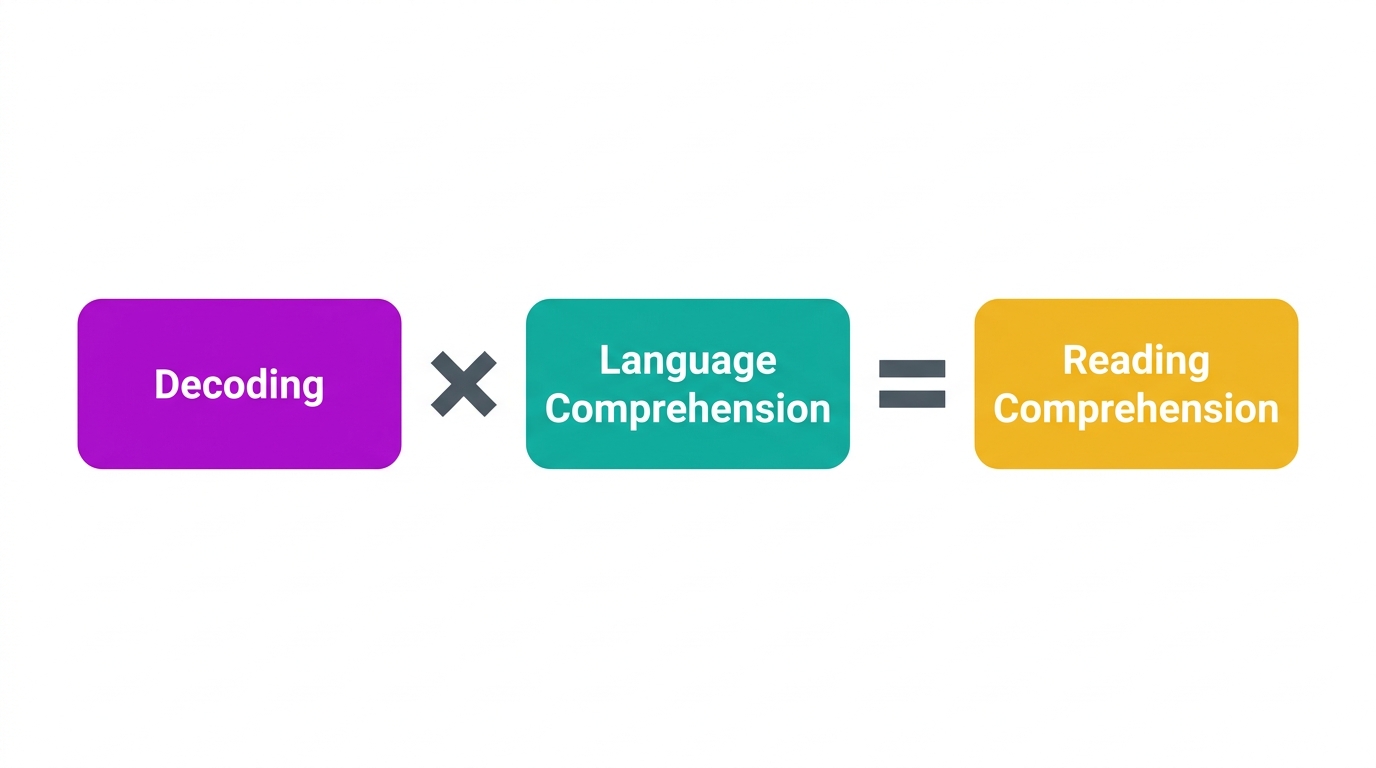
The Simple View of Reading states that reading comprehension is the product of decoding and language comprehension. A student needs both: the ability to read words accurately and the language knowledge to understand them. If either is weak, comprehension breaks down.
This framework, along with Scarborough Reading Rope, explains why instruction has to develop word recognition and language comprehension together rather than focusing on one alone.
Science of Reading vs Balanced Literacy
The clearest contrast is with balanced literacy. Balanced literacy often teaches phonics incidentally and encourages students to guess unfamiliar words from context or pictures. The science of reading instead calls for explicit, systematic phonics and decoding instruction. The stakes are real: on the National Assessment of Educational Progress, only about a third of U.S. fourth graders read at or above the proficient level.
How Mote Fits a Science-of-Reading Classroom
Mote is an accessibility and practice layer, not a phonics program. Its Read Aloud models fluent reading and gives developing readers access to grade-level text, while its dictionary and vocabulary tools support the language-comprehension side of reading. Teachers keep leading the explicit instruction at the heart of the science of reading, and Mote scaffolds access and practice alongside it.
The Bottom Line
The science of reading is an evidence base, not a brand. It points to explicit instruction in five pillars and to developing word recognition and language comprehension together. Choose curricula and tools that align with that research. Mote can support access and practice, but the explicit instruction you provide is what teaches students to read.